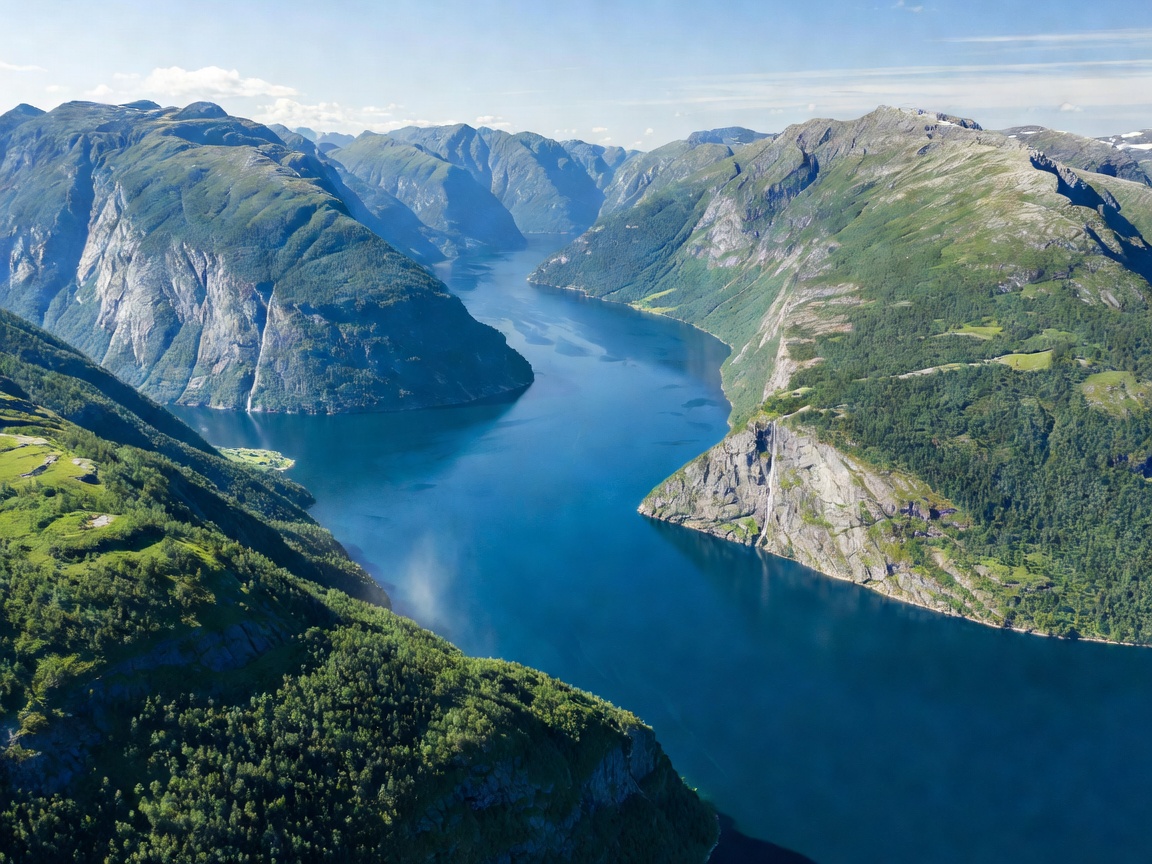
The Majesty of Western Norway
The western coast of Norway is slashed by deep, glacially carved valleys that flood with sea water, creating the iconic fjords. For travelers seeking a temperate escape from summer heatwaves, this region offers an unparalleled mix of dramatic scenery, outdoor adventure, and clean, crisp air. With average summer temperatures ranging comfortably between 12°C and 18°C (54°F to 64°F), the Norwegian fjords represent the gold standard of the European coolcation.
Here, the landscape dictates the pace of life. Sheer cliffs rise thousands of meters straight out of the dark water, waterfalls cascade from hanging valleys, and small, vibrant villages cling to narrow strips of shoreline. The cool climate ensures that hiking up these steep inclines is invigorating rather than exhausting.
Choosing Your Fjord Experience
Norway's coastline is incredibly complex, featuring hundreds of fjords. However, a few stand out for their accessibility and dramatic scale.
Sognefjord & Nærøyfjord
Sognefjord is Norway's longest and deepest fjord, extending over 200 kilometers inland. Its most famous branch is Nærøyfjord, a UNESCO World Heritage site known for its exceptionally narrow passages and steep, towering sides. Taking a silent, electric passenger ferry through Nærøyfjord offers a serene, almost mystical experience, especially when the morning mist hangs low over the water.
Geirangerfjord
Further north, Geirangerfjord is renowned for its spectacular waterfalls, including the famous "Seven Sisters" which plunge directly into the fjord. The steep, winding Eagle Road (Ørnevegen) offers panoramic viewpoints that are among the most photographed in Scandinavia. The cool microclimate here keeps the surrounding peaks dusted with snow well into the early summer.
Hardangerfjord
Often referred to as the "Queen of the Fjords," Hardangerfjord is famous for its fruit orchards. In late spring and early summer, the hillsides are covered in apple and cherry blossoms, set against the backdrop of the Folgefonna glacier. This region is slightly more pastoral and offers excellent, moderate hiking trails with vast views.
Land vs. Sea Travel
A key decision when planning a Norwegian coolcation is determining your mode of transport.
Cruising: Large and small cruise ships navigate the fjords throughout the summer. This offers a highly convenient, unpack-once experience, granting front-row views of the cliffs from the water. However, it can limit the time spent exploring the interior landscapes and high-altitude hiking trails.
Overland and Ferries: Renting a car or utilizing Norway's excellent public transit (trains, buses, and local ferries) provides much deeper immersion. The drive often involves navigating spectacular mountain passes, plunging into deep tunnels, and taking short car ferries across the waterways. The famous Norway in a Nutshell route combines train (including the steep Flåm Railway), bus, and boat to provide a comprehensive tour for those without a car.
Pros and Cons
Pros:
- Exceptional, world-class scenery at every turn.
- Highly developed, efficient, and clean infrastructure.
- A deep commitment to sustainable and eco-friendly tourism (e.g., electric ferries).
- Perfect temperatures for demanding physical activities like hiking and kayaking.
Cons:
- Norway is notoriously expensive; food, alcohol, and lodging will require a robust budget.
- Rain is a frequent companion on the west coast, regardless of the season.
- Driving involves many slow, winding roads and ferry wait times, meaning travel distances take much longer than they appear on a map.
Preparation and Packing
As with any northern coolcation, preparation is vital. The coastal weather is heavily influenced by the Gulf Stream, keeping it warmer than its latitude suggests, but it also brings frequent Atlantic weather systems. Visitors must pack waterproof jackets, quick-drying trousers, and sturdy footwear. An umbrella is generally useless against fjord winds; a high-quality hardshell jacket is a much better investment. Embrace the Norwegian concept of "friluftsliv" (open-air living) by coming prepared to enjoy nature, rain or shine.