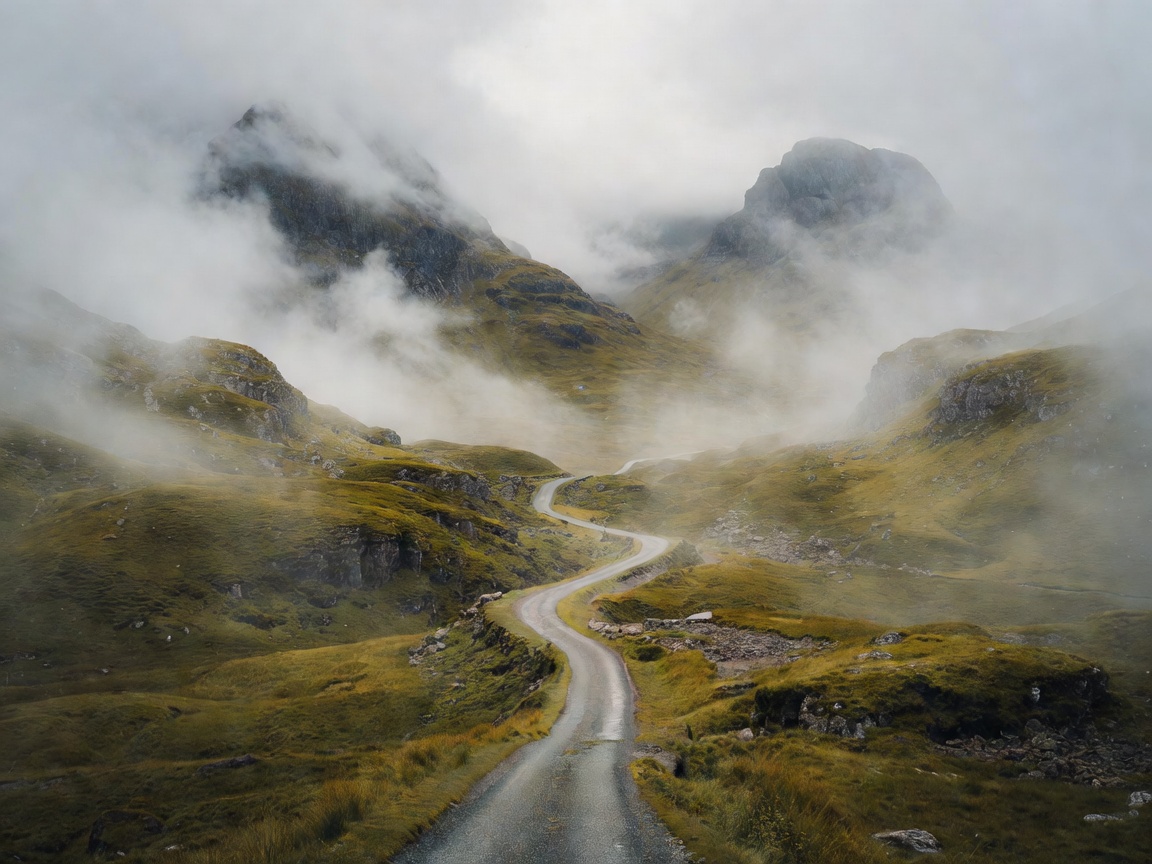
The Romance of the Highlands
The Scottish Highlands offer a deeply atmospheric travel experience that is perfectly suited for a coolcation. While southern Europe bakes under the mid-summer sun, the north of Scotland enjoys a mild, maritime climate with summer averages sitting comfortably between 14°C and 19°C (57°F to 66°F). It is a land defined by dramatic geology—deep glacial glens, dark lochs, and sweeping, heather-clad moors.
Traveling through the Highlands feels like stepping into a historical epic. Ancient stone castles overlook tidal estuaries, and single-track roads wind through landscapes that have remained largely unchanged for centuries. The cool air makes hiking the Munros (Scottish mountains over 3,000 feet) an accessible pursuit during the summer months.
Notable Routes and Regions
The North Coast 500 (NC500)
Often dubbed "Scotland's Route 66," the NC500 is a 516-mile scenic drive that loops around the northern coast, starting and ending in Inverness. The route takes travelers through some of the most isolated and striking coastal scenery in Europe. You will encounter white sand beaches that look almost tropical (until you feel the water temperature), sea stacks rising from the churning Atlantic, and vast, empty peat bogs. Due to its rising popularity, driving the NC500 requires careful planning and advance booking of accommodations.
The Isle of Skye
Connected to the mainland by a bridge, the Isle of Skye concentrates the best of Highland geology into one accessible island. Highlights include the jagged peaks of the Cuillin range, the bizarre rock formations of the Old Man of Storr, and the Quiraing landslip. The weather on Skye is famously moody; a misty, cool morning can give way to brilliant sunshine by afternoon, casting dramatic shadows across the glens.
Cairngorms National Park
Located in the eastern Highlands, the Cairngorms offer a different flavor of coolcation. This massive national park features high alpine plateaus, ancient Caledonian pine forests, and roaming herds of reindeer. It is a premier destination for hiking, mountain biking, and exploring the whisky distilleries that line the River Spey.
The Highland Midge: A Summer Warning
No guide to a Scottish summer coolcation is complete without mentioning the Highland midge. These tiny, biting insects thrive in damp, still conditions, particularly in the west and on the islands from June to August. While they are a nuisance, they shouldn't deter a visit. Midges cannot fly in a breeze stronger than about 5 mph, and they avoid direct, strong sunlight. Packing a specialized midge net for your head and applying insect repellent (specifically formulations containing Smidge or DEET) will mitigate the issue.
Pros and Cons
Pros:
- Deeply rich history interwoven with spectacular natural landscapes.
- Mild, comfortable temperatures ideal for walking, hiking, and road-tripping.
- Excellent culinary scene, particularly focusing on fresh seafood, venison, and world-renowned single malt whiskies.
- A strong sense of isolation and wilderness is easily accessible just a few hours' drive from major cities like Glasgow or Edinburgh.
Cons:
- The midges can be intensely frustrating on calm, humid days.
- Single-track roads require confidence and patience from drivers unfamiliar with the passing place system.
- Accommodation in remote areas is limited and books up quickly during the peak summer months.
Travel and Accommodations
Inverness acts as the gateway to the Highlands and has a well-connected airport and railway station. While a car is by far the easiest way to explore the remote glens, the West Highland Line offers one of the most scenic train journeys in the world, running from Glasgow to Mallaig.
Accommodations range from luxurious converted castles and remote hunting lodges to welcoming Bed & Breakfasts and bothies (simple, free shelters for hikers). Embrace the unpredictable weather, pack sensible layers, and prepare to be enchanted by the rugged beauty of northern Scotland.